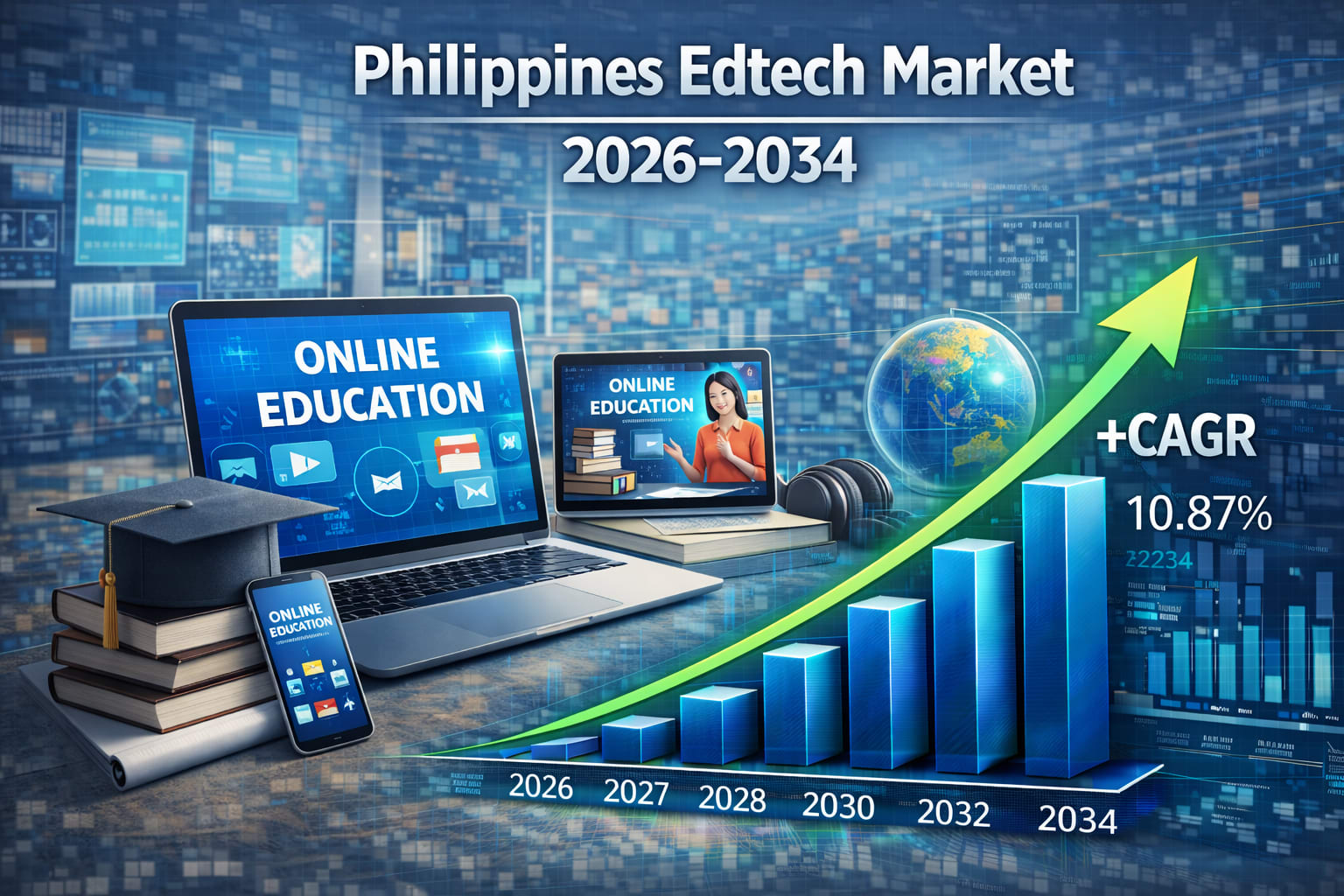
Why Online Learning is the Future of Education Worldwide

Why Online Learning is the Future of Education Worldwide
Discover how online learning is driving the future of education around the world. Learn about its benefits, challenges and how it is evolving classrooms into global digital communities.
In an increasingly digital world, online learning has transformed the way that people acquire an education. Whether we are talking about an elementary or secondary student, a university student, or a professional returning to school to upgrade their skills, the internet has opened the door for education to be flexible, affordable, and global.
The COVID-19 pandemic helped change the frequency of online learning; even after life went back to normal, online learning had only grown in popularity. Today, it’s clear that online learning is the future of education worldwide due to advances in technology, accessibility, and innovation that we simply cannot do in a traditional system.
The Global Impact of Online Learning
One of the most impactful aspects of online learning, is accessibility. It doesn’t matter where you live (a busy big city or a remote village), you can go online today and access a world-class education from your laptop or smartphone. The universities of Harvard, Stanford, and Oxford, in addition to global online learning systems (like Coursera, edX, and Udemy), are offering online courses in almost every imaginable subject.
This suggests that a student in the U.S.A or the U.K. could enroll in a course that is similar to a course taken by a student in Pakistan, Brazil, or Kenya.
type and credibility show a lot like writing and a place in the middle of the breakfast cereal.
The limits of education are no longer defined by geography; online learning has transformed education into a global experience with the ability to connect learners and educators across geographic boundaries.
2. Flexible Learning for All Ages
Traditional education has strict schedules that can be difficult for working professionals or parents. Online learning opens up possibilities for flexibility; you can study anytime, anywhere, and at your own pace.Distance education provides an experiential learning opportunity while allowing professionals to balance work, family, and other obligations.
As an example, a full-time employee could take an online course after work or a stay-at-home parent can take the course after their children go to bed. This level of flexibility allows lifelong learning to not just be a goal but realities of our personal exploration.
3. Cheaper and Readily Available Education
Education is expensive in many parts of the world. However, online learning is a much cheaper alternative. Students do not have to pay for housing, transportation, or expensive textbooks when they factor in the cost of a traditional program versus an online program. Many online learning platforms provide free or affordable courses, eliminating the cost barrier for students regardless of their financial stability.
4. Customized Learning Opportunities
Every student approaches their learning endeavors differently—some learn best visually, some prefer reading and writing, and others prefer hands-on practice. Online learning platforms utilize algorithms based on AI to provide personalized education by customizing content, pacing, and complexity for each individual learner. In a traditional classroom setting, this breadth of customization will not always be achievable.
Quizzes, checking progress, and giving adaptive feedback are interactive features that personalize learning and help students analyze their strengths and weaknesses. This promotes better outcomes and increased satisfaction from the learner. Individual online learning provides the best opportunity.
5. Exposure to the Global Experts and Communities
In a traditional education setting, students are often limited to who ever is teaching locally or at the comfort or level of a local professor. Online learning turns this upside down as now students have access to online professors and experts known around the world.
You can study business from successful entrepreneurs, computer science from engineers in the field (and they will actually explain complex engineering principles), or learn creative writing from bestselling authors without leaving your living room.
Additionally, online learning and education can create an engaging digital community. Through discussion boards, group projects, or live sessions, students are connecting with and working alongside students from all over the world. This type of learning can enhance the experience and create a sense of culturally understanding while you are learning.
6. Integration of Technology and New Learning
Online learning would not be possible without the existence of technology, and it continues to improve. AI, Virtual Reality (VR) and Augmented Reality (AR) increase engagement and interactivity in learning environments like never before.
Example:
VR labs allow students studying science to safely perform experiments online.
AI tutors promote instant feedback and facilitate real-time guidance for learners.
Gamification creates fun and motivation through rewards and tracking progress.
These new engagements do not only enhance understandings, but they are preparing learners for a world of technology.
7. Learning for Life, Learning for Career
In the 21st century, education has a different meaning than just to happen at school; it means learning for life. As we move faster into an era of change with increased frequency, new tools, new technologies are adapting too fast so continuous education and upskilling are key to staying on the cutting edge of careers.
For example, digital marketing experts may need to learn new Search Engine Optimization (SEO) trends, and data analysis experts may need to learn the latest AI tools – all online! Easy access to knowledge is allowing people to grow personally and professionally at a rate we never have seen before.
8. Online Learning Throughout and Beyond the Pandemic
The COVID-19 pandemic fundamentally altered education. Once schools and universities shut down, online learning was the only way to carry on with education. What was once intended to be temporary became abundantly clear, as digital learning provided many long-term benefits.
Even after reopening, a large number of institutions adopted blended models of instruction—the combination of online and face-to-face. Consequently, blended learning is now here to stay, demonstrating that online learning is not simply a backup plan to education, but an essential part of education in today’s world.
9. Challenges to Online Learning
Of course, like anything, there is potential for challenges with online learning. Students may experience server outages, low motivation, or even difficulty focusing in the online learning environment; and some subjects, particularly laboratory sciences or arts that require students to have physical interaction, are incredibly difficult to replicate in the online learning environment.
Nonetheless, education and technology are continually improving online learning and educational systems. For example, while overcoming some of the aforementioned challenges, they have created better systems for student engagement, live video sessions, and a better designed interface—bridging the gaps in digital learning systems. The focus now is on making online learning even more interactive, human-centered, and accessible to all.
10. The Digital Future of Education
As we look beyond 2025, the future of education is digital, inclusive, and global. Governments and institutions are investing billions of dollars around the world in EdTech (Educational Technology) in order to create smarter, faster, and more personalized forms of learning.
Can you imagine a world where a learner can:
Learn almost any subject that is offered from the best-teaching professionals in the world
Utilize artificial intelligence tools to track your progress and achieve tailored feedback
Collaborate with peers across the globe in online classrooms while learning as a group
The seeds of this future are already being planted now. Online learning is not replacing traditional learning – it is augmenting it and allowing knowledge to be available to anyone, anywhere.
Conclusion
The rise of Online Learning and Online Education is more than a technological change; it is a social change. It is breaking down barriers, empowering millions of people, and changing how learning will occur for the rest of humanity.
Although we will face challenges regardless of how impactful online education is, we can embrace the opportunities at hand. From flexible schedules to global collaboration, online education is making learning limitless.
The future of education will not be one single classroom; instead, the future of education will be every home, every device, and every curious mind willing and ready to learn. Online learning is more than the future of education across the globe; Online learning is creating the present which will change the future of a smarter, more connected globe.
link