OU student leaders discuss now reservable campus offices | News
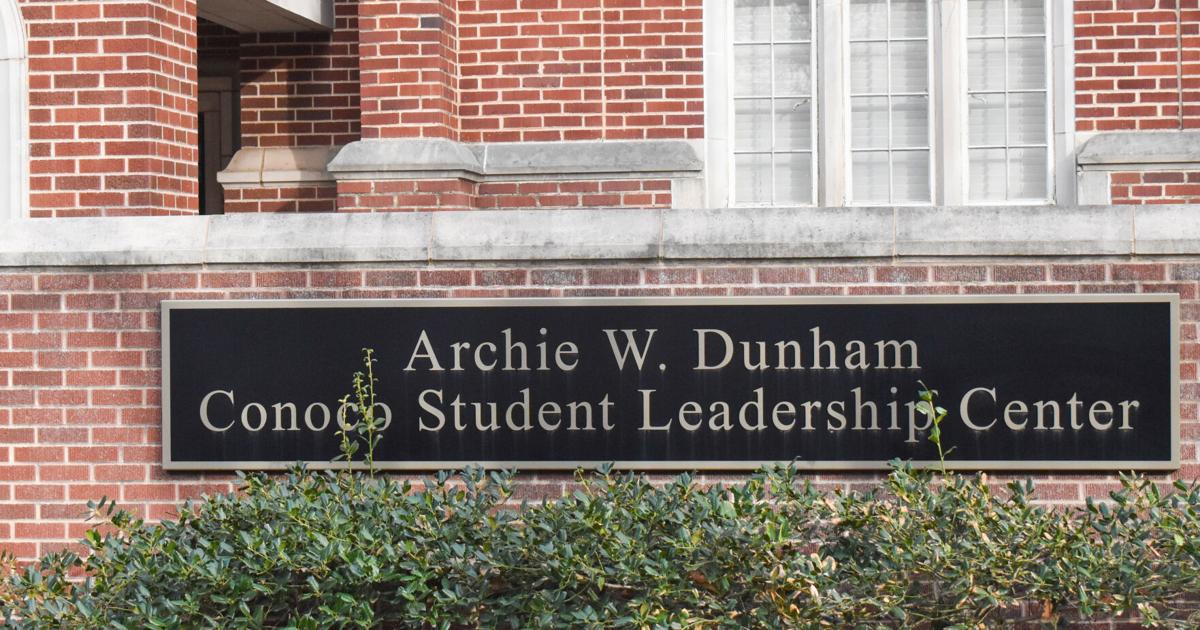
Registered Student Organization leaders expressed frustration as the Student Government Association announced office spaces for organizations housed in the Archie W. Dunham-Conoco Student Leadership Center will now become reservable spaces for the upcoming academic year.
On March 14, student leaders housed in the Conoco Leadership Center received an email from George Ahmadi, director of student government and organization services, explaining that following the end of the academic year, SGA would be implementing a pilot program that would transform the offices in the Conoco Leadership Center to serve as multipurpose, reservable spaces.
Stevi Wampler, former chair of The Big Event, OU’s official day of community service, said she was completely caught off guard by the decision.
“You’re making this decision that impacts 550 RSOs, and you haven’t talked to them,” Wampler said.
Originally, RSOs could apply for exclusive office spaces for the length of the academic year in the leadership center and would be selected based on the size and reach of their organization.
According to the new “Conoco Student Leadership Center Pilot Program Act of 2024,” which was passed by SGA on April 23, RSOs will reserve times to use spaces on the second and third floors of the leadership center starting in fall 2024. Through this program, no RSO will be allocated an exclusive, individual space.
The bill was authored by the Space Allocation Committee, comprised of Abby Halsey-Kraus, former chair of the Undergraduate Student Congress; Claire Burch, chair of the Graduate Student Senate; Katie Tramel, former chair of Campus Activities Council; SGA President Caden Glasscock and Vice President Cyrus Mortavazi.
Glasscock said the reasoning behind the pilot program was to optimize the spaces in the leadership center because, according to data collected by SGA over the past year, these spaces are severely underutilized.
“We just think that this will overall better the student experience and RSOs,” Glasscock said.
Wampler said she agrees that every organization should have access to reservable spaces but that many organizations located in the Conoco Leadership Center serve thousands, and the pilot program will heavily impact those operations.
Wampler said there are crucial services her organization provides that requires it to have an office space. According to Wampler, The Big Event works with many elderly and older people who don’t have smartphones or emails so they rely on the landline located in the office.
Wampler also said The Big Event needs a centralized desktop because they handle a database of 5,000 entries that wouldn’t be capable of being run on a regular laptop.
Halsey-Kraus said SGA has received various reactions from student organizations in response to the pilot program.
“I know a lot of RSOs that haven’t been able to utilize the space are excited to be able to hold office hours and to be able to actually host meetings,” Halsey-Kraus said.
Glasscock said with the reservable system, those spaces will be better optimized so that all 500+ organizations will have access instead of only the 17 organizations that use it now.
Elyce Ankomah, executive chair of Class Council, said she felt there was not enough clear communication between SGA and RSOs about the change. Ankomah said she wished SGA had announced the change at the Vice President’s Advisory Council, a gathering of major student leaders on campus.
“VPAC would have been a great way to talk to us about it because we could have given them like suggestions, tips and stuff … so that did throw me off, and I’m sure it threw a couple people off,” Ankomah said. “It was just like we were being told and no one really asked our opinion.”
Ankomah said she recognizes there are some office spaces that aren’t fully used, but there are many organizations that do use their space.
“There are plenty of offices that are used, and the fact that they didn’t talk to us at first is just kind of strange,” Ankomah said. “We’re supposed to be on an equal playing fields.”
According to the bill, the pilot program transforms the second and third floors into multipurpose spaces, but the first floor would remain exclusive offices for SGA members.
Glasscock said the reasoning behind this was because SGA handles a lot of funding and clerical work that makes it necessary for an office and since SGA is not a registered student organization, it’s necessary for them to have that space.
Ahmadi also added that all SGA members who hold offices on the first floor are paid employees who are required by Human Resources to have office spaces.
Halsey-Kraus said she understood the decision took some people off guard by the program, but SGA was working on a tight timeline between Glasscock and Mortazavi’s inauguration in December, and they needed to make a decision before Spring Break.
Wampler also said it was unfair that the bill was created by people who were not impacted by the changes.
“These students that are making these decisions aren’t impacted by this decision because the first floor of Conoco is untouched,” Wampler said.
While in some ways she understands the motivation behind the decision, Wampler said she felt the way SGA communicated the change was not clear.
“There was a large lack of transparency, lack of communication,” Wampler said. “As an organization that represents the student body, you would think they are thinking about how are we communicating this to our organizations, taking them into account, how are we taking their operations, their concerns, their opinions.”
This story was edited by Ana Barboza and Taylor Jones. Avery Avery copy edited this story.
link