Host families needed for exchange students

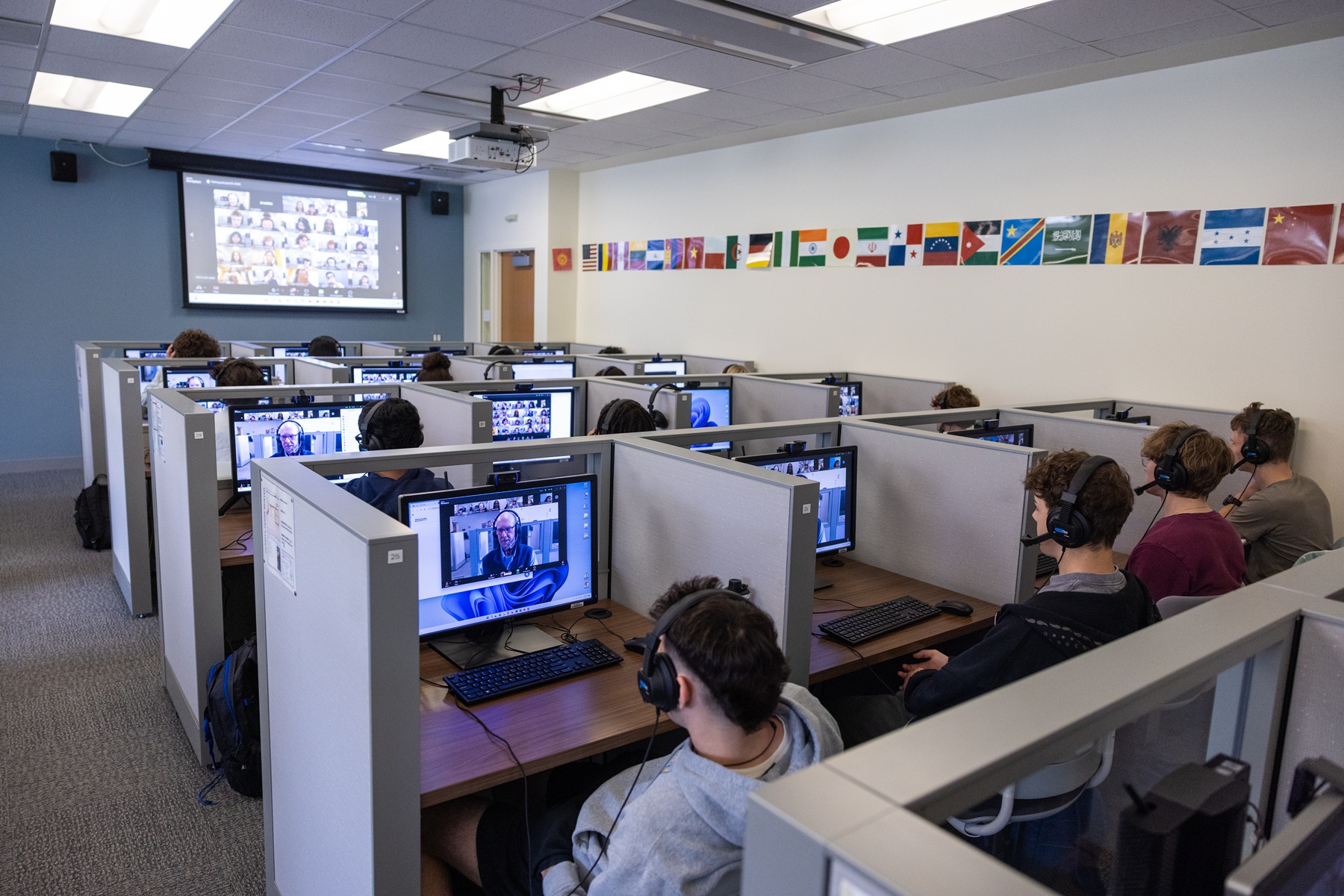
HANOVER — The Program of Academic Exchange, also known as PAX, is looking for volunteers in the Upper Valley to host as many as eight more students for this school year.
PAX, a New York state-based nonprofit that started in 1990, partners with other organizations to facilitate foreign exchange programs in the U.S. and abroad.
The exchange students, with homes from Morocco to Indonesia, earned their scholarships through the State Department.
But the programs are threatened now that Congress has cut the department’s budget for its educational and cultural exchange programs by 93% for the next fiscal year.
The looming budget cuts combined with increased anti-immigrant sentiments have made it particularly difficult to find host families this year.
This year’s group of students still has “quite a few” Muslim students trying to find host families, said Kimberly Eckhardt, a Landgrove, Vt.-based local coordinator and supervisor for PAX across Vermont and New Hampshire. “In years previous, you know, this area had been much more welcoming.”
So far in the Upper Valley this year, three exchange students have been placed at Hanover High School.
There are five more students waiting for host families in the Kennedy-Lugar Youth Exchange and Study, or YES, program, which began after 9/11 to promote understanding between the U.S. and predominantly Muslim countries. Another three are waiting from Future Leaders Exchange program, or FLEX, which began in 1993 to foster cultural exchange between the U.S. and former Soviet Union states.
“Finding even one or two (more host families) would be phenomenal for our area,” said Eckhardt.
Online comments have made recruitment of host families more difficult.
“This is a first for me this year with people being so — negative doesn’t even cover it — like hateful online to requests for host families,” said Eckhardt.
While hateful comments are not entirely new for Eckhardt, what’s unusual this year is the lack of comments that challenge them.
“I don’t see any supporting posts,” Eckhardt said. “In years past, you know, you would see people who would comment their own personal experiences (in support of student exchange programs).”
The antipathy has largely been focused on minority groups, despite the programs having been created to foster mutual understanding amid cultural tension.
Trouble finding host families would usually not be an issue, as students could just defer their exchange to the next year. But this is not an option this year, Eckhardt said.
For the YES and FLEX programs, PAX relies on State Department funding — which is now in question.
Though it will continue through this year, YES funding has been cut for future years.
The FLEX program, which receives funding every three years, has been approved for a three year period starting after this year, but still faces uncertainty about receiving enough funding, Eckhardt said.
Last year, there was a spending freeze that affected students who were already in the country, which froze their monthly stipends for expenses such as medical bills, program requirements and sports fees, Eckhardt said.
And while the funds were later restored, this showed that funding for approved projects could be withheld.
“And now we’re left wondering,” Eckhardt said, “Well, if they’re cutting so much of the budget, even though this is an approved program, will they just refuse to pay again?”
Still, both programs are fully operational for the current school year.
“One opportunity can be huge for a community to meet a student from, you know, somewhere that quite frankly they’ve probably never heard of,” Eckhardt said.
Host families can come in all shapes and sizes — with or without kids, spouse or single or any variation.
The program also can move students to other host families at any point of the year if the match isn’t working for any reason.
Those interested in hosting a student can email Eckhardt at [email protected]. The deadline to apply is the end of the month, this Sunday.
What to Read Next
link