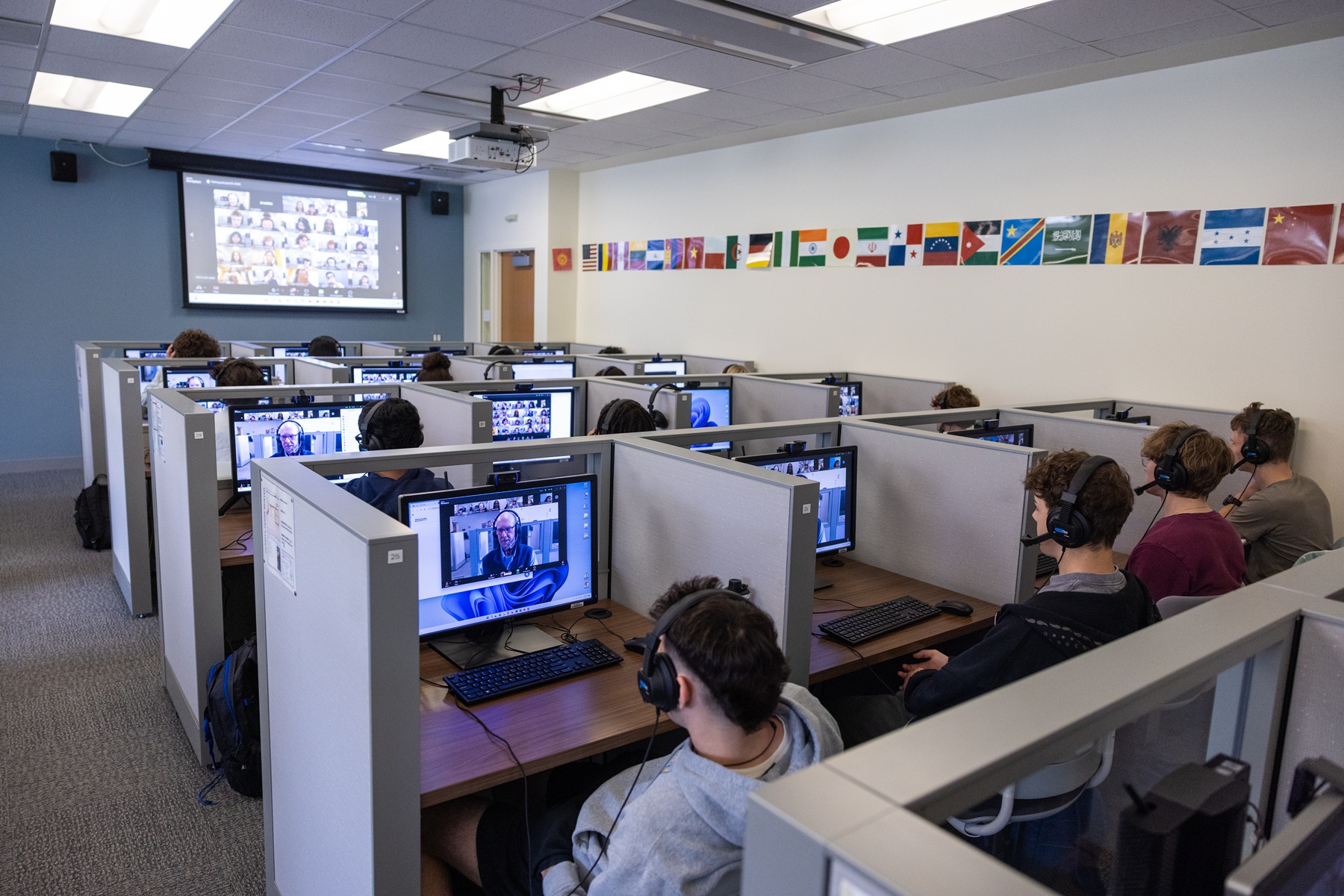
Exchange program fosters China-France partnership in talent cultivation
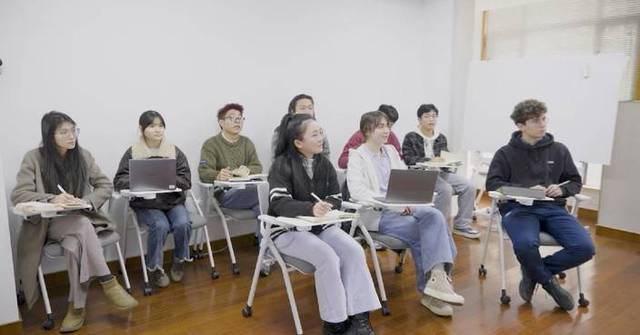
An exchange program between China and France has provided thousands of French students with the opportunity to attend Chinese universities over the past year, giving them a comprehensive and multidimensional view of the country through their studies.
In 2024, China proposed an initiative aimed at bringing the total number of French students in China to more than 10,000 and doubling the number of young Europeans on exchange programs to China within the next three years.
Then, in June of that year, the education ministries of China and France jointly launched the Young Envoys Scholarship (YES) program during the first China-France Education Development Forum held in Paris.
Among the students to take advantage of the program is Mathis Champaigne, a French master’s exchange student from the Institute of Higher Electronic Education (ISEP) in Paris. Through YES, he arrived at the School of Artificial Intelligence and Automation, Huazhong University of Science and Technology (HUST) this September for a five-month study program.
According to the student, the program offered a valuable opportunity to learn about artificial intelligence (AI) from renowned scholars.
“In this country, you are very advanced in this AI field and so you have a lot of researchers, a lot of universities, very involved in this AI research. So for me that was an opportunity to learn from a great professor in a great university,” Champaigne said.
Currently, 29 French students from seven French universities are studying at HUST across various majors, for periods ranging from two weeks to a full academic year. For some, a short-term exchange can give way to deeper ambitions.
“I want to extend my semester and stay longer because I feel like here the campus is made for students to have good experience while studying,” said another YES program participant of HUST, an undergraduate student from the University of Strasbourg.
Since the initiative was proposed over a year ago, more than 8,300 French students have come to China for exchanges and studies, helping to spur a broader trend across Europe, with about 32,000 students from across the continent having chosen to undertake exchange programs in China.
The program also partners with other Chinese institutions, including the East China University of Science and Technology (ECUST), where exchange students have had similarly successful experiences.
“So, the YES program is a really good program to study abroad and you can choose many different topics and minors. I think that’s the best way to see China,” said Paul Ferrigno, another YES program participant of ECUST, a graduate student from Montpellier Higher College of Chemistry.
“And engineers in the future, they will have to see by themselves how this country is changing very quickly, how this country is very good in innovation, research, technology, and finally how China is addressing global warming and sustainable development,” said Jacques Mercadier, French dean of the International Elite Engineering School of ECUST.
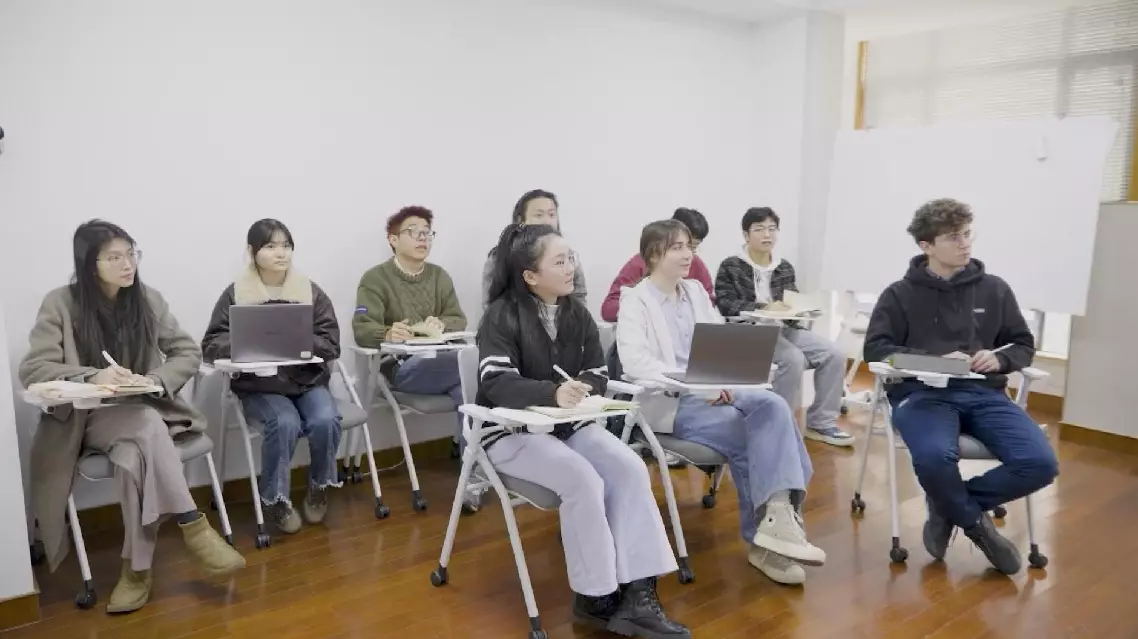
Exchange program fosters China-France partnership in talent cultivation
China and Germany, as major countries, should shoulder their responsibilities, uphold mutual respect, transcend differences in social systems, historical backgrounds and cultures, and build a more mature model of positive interaction and a more stable bilateral policy framework, Chinese Foreign Minister Wang Yi said on Monday in Beijing.
Wang, also a member of the Political Bureau of the Communist Party of China Central Committee, told German Foreign Minister Johann Wadephul that it is hoped that Germany will view China’s development as an opportunity for deeper cooperation and a driving force for mutual benefit and win-win outcomes, and work together to promote the steady and healthy development of the China-Germany all-round strategic partnership.
Noting that this is the first visit to China by a German foreign minister since the formation of Germany’s new government — though the visit has encountered twists and turns — Wang quoted a Chinese saying: “Good things come to those who wait.” He emphasized that “the timing is not the key; what truly matters is the purpose. The visit should be for cooperation, not confrontation; for enhancing mutual understanding and trust, not widening differences.”
Wang further urged Germany to encourage the EU to return to a rational and pragmatic China policy, adhere to the correct direction of mutually beneficial cooperation, resolve differences through dialogue, and avoid politicizing economic issues, instrumentalizing trade issues, or securitizing normal cooperation.
Wang emphasized that the one-China principle serves as an important political foundation for China-Germany relations, and there is no room for ambiguity. He further noted that unlike Germany, Japan has yet to conduct a thorough reflection on its history of aggression in the eight decades since the end of WWII.
Wadephul said that in the face of a turbulent global landscape, Germany and China need to shoulder special responsibilities, strengthen communication and coordination, and become reliable and predictable partners for each other.
He said that Germany remains firmly committed to the one-China policy, and this position is unwavering.
German enterprises in China have full confidence in the Chinese market and are willing to further deepen their presence in the country, Wadephul said, adding that Germany supports the EU and China in seeking mutual benefit and win-win outcomes through dialogue and stands ready to play a constructive role in this regard.
The two sides also exchanged views on the Ukraine crisis. Wadephul elaborated on Germany’s position and expressed hope that China would leverage its influence to help bring about an early end to the crisis.
Wang reaffirmed China’s consistent stance, emphasizing that all parties should cherish the current momentum for a political settlement, work towards the same goal, and ultimately reach a fair, durable and binding peace agreement through dialogue and negotiations.
China supports all efforts conducive to peace and will continue to play a constructive role in this regard, Wang added.
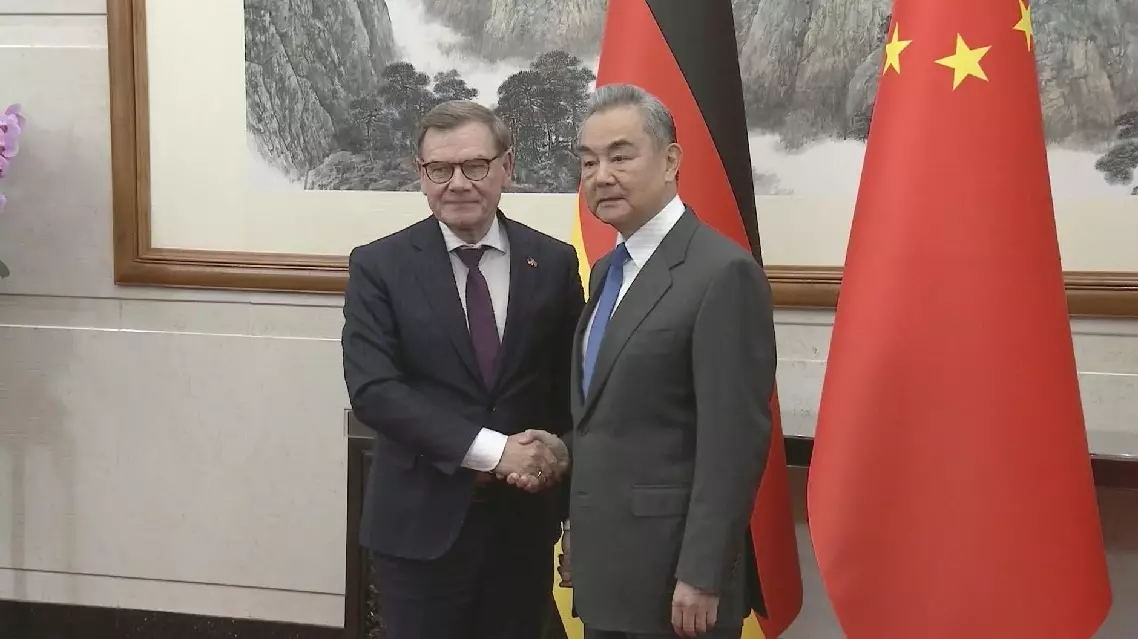
Chinese FM calls on China, Germany to shoulder responsibilities as major countries for more stable bilateral policy framework
link